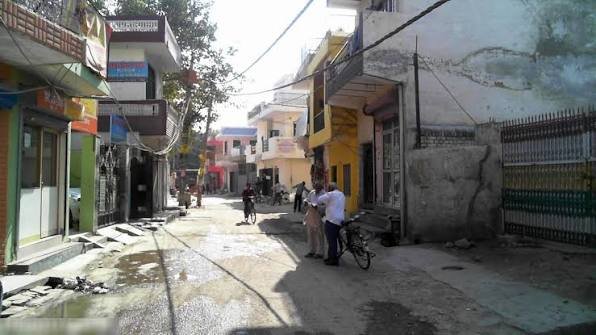
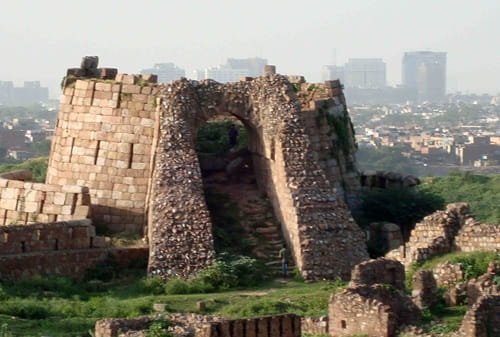
Beneath the crumbling ramparts of one of Delhi’s largest 14th-century forts, Tughlaqabad Village has grown up almost literally inside history — its residential lanes press right up against the fort’s stone walls, and its identity is shaped as much by the Tughlaq-era ruins as by its role as a busy South East Delhi transit and residential pocket. Long overshadowed by the fort’s fame, the village itself has quietly become a practical, well-connected address thanks to its metro access and closeness to the Delhi-Faridabad border.
Tughlaqabad Village Overview
| Detail | Information |
| Location | South East Delhi, adjacent to Tughlaqabad Fort |
| District | South East Delhi |
| Nearest Metro Station | Tughlakabad (Violet Line) |
| Distance from Tughlakabad Metro | Approx. 1–2 km |
| Distance from Connaught Place | Approx. 18–20 km |
| Distance from Faridabad Border | Approx. 6–8 km |
| Known For | Tughlaqabad Fort ruins, Violet Line connectivity, budget housing |
| Notable Landmark | Tughlaqabad Fort (ASI-protected monument) |
| Nearby Localities | Sarita Vihar, Badarpur, Mehrauli-Badarpur Road belt, Ali Village |
| Best For | Budget renters, history enthusiasts, Faridabad-bound commuters |
A Village Built in the Shadow of Ghiyasuddin Tughlaq’s Fort
Tughlaqabad Village sits at the foot of Tughlaqabad Fort, the massive fortified city built by Ghiyasuddin Tughlaq in the early 14th century, and much of the village’s layout has developed around and against the fort’s imposing stone boundary walls over the centuries. That physical closeness gives the locality a character found almost nowhere else in Delhi.
- The fort itself, now under Archaeological Survey of India protection, draws history enthusiasts and photographers, indirectly bringing steady footfall through the village’s approach roads.
- Encroachment near the protected monument has been a recurring concern for heritage authorities, with parts of the village built close enough to the fort walls to occasionally draw conservation scrutiny.
- The area sits along the Mehrauli-Badarpur Road corridor, placing it within South East Delhi’s belt of urban villages that have grown steadily denser over recent decades.
Reaching Tughlaqabad Village
Tughlaqabad’s biggest transport advantage is its direct metro access, a rarity among Delhi’s fort-adjacent villages, which has meaningfully shortened commute times toward both central Delhi and Faridabad.
By Metro
- Tughlakabad Metro Station on the Violet Line sits just 1–2 km from the village core, offering a direct connection toward Central Secretariat, Kashmere Gate, and onward to Faridabad in the opposite direction.
- Autos and e-rickshaws readily cover the short stretch between the station and the village’s residential lanes.
By Road
- The Mehrauli-Badarpur Road runs close by, linking Tughlaqabad Village to Saket, Badarpur, and further toward the Faridabad border.
- The Delhi-Faridabad section of NH 19 is a short drive away, useful for residents commuting into Haryana for work.
- Internal lanes near the fort tend to be narrow and heritage-constrained, so two-wheelers and autos generally navigate them more easily than larger vehicles.
By Bus
- DTC buses connecting Badarpur, Saket, and Sarita Vihar routes pass through or near the village, offering an affordable alternative for residents without private transport.
What’s Nearby: Markets, Healthcare, and Schools
Tughlaqabad Village’s own retail footprint is modest, so residents typically depend on the better-developed commercial and civic infrastructure in neighbouring Sarita Vihar and Badarpur for most substantial needs.
Local Markets
- Small shops along the main village road cover daily groceries and essentials, while Sarita Vihar’s commercial areas, a short drive away, offer a wider retail and dining spread.
- Badarpur’s market strip, similarly close by, serves as an additional option for household shopping and everyday services.
Healthcare Facilities
- Basic clinics operate within the village for routine care, while Apollo Hospital in Sarita Vihar and other South East Delhi facilities are within a 15–20 minute drive for advanced treatment.
Educational Institutions
- A handful of government and private schools serve the local population directly, with families often looking toward Sarita Vihar or Saket for higher-rated senior secondary options.
Why Tughlaqabad’s Location Still Draws Interest
Beyond its historical weight, Tughlaqabad Village offers a genuinely practical mix of affordability and connectivity that keeps it relevant for a specific kind of Delhi resident.
- Direct Violet Line access gives it a transit advantage over many other South East Delhi urban villages that lack nearby metro stations.
- Property and rental costs remain lower than in Sarita Vihar or Saket, despite comparable travel times to South Delhi’s core.
- Its position near the Faridabad border makes it a practical base for those working across the Delhi-Haryana boundary without committing to Faridabad’s higher-density housing.
Frequently Asked Questions
Q1. Is Tughlaqabad Village within walking distance of the fort?
Yes, the village borders the fort’s outer walls directly, making it one of the few Delhi localities with a monument practically at its doorstep.
Q2. How close is the Violet Line metro to Tughlaqabad Village?
Very close — Tughlakabad Metro Station is roughly 1–2 km away, an easy auto ride from most parts of the village.
Q3. Is Tughlaqabad Village a good option for commuting to Faridabad?
Yes, its proximity to NH 19 and the Faridabad border makes it a practical base for cross-border commuters.
Q4. Are healthcare facilities easily accessible from Tughlaqabad Village?
Routine care is available locally, but for advanced treatment, most residents travel a short distance to hospitals in Sarita Vihar.