High above the Parvati Valley, isolated by steep mountains and a fiercely preserved social order that predates most recorded Indian history, Malana has built a reputation few villages anywhere can rival. Locals here trace their customs to what they describe as one of the world’s oldest democracies, maintain a parliamentary system distinct from mainstream Himachali governance, and speak Kanashi, a language largely unintelligible to outsiders. That isolation, both geographic and cultural, is precisely what continues to draw trekkers and curious travellers up the mountain each year.
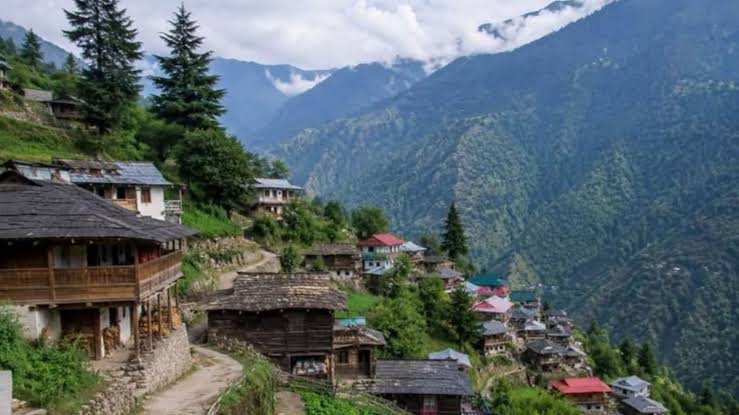
Malana Village Overview
| Detail | Information |
| Location | Parvati Valley, Kullu district, Himachal Pradesh |
| District | Kullu |
| Altitude | Approx. 2,652 metres |
| Distance from Kullu Town | Approx. 45–50 km |
| Distance from Manali | Approx. 75–80 km |
| Distance from Bhuntar Airport | Approx. 55–60 km |
| Known For | Ancient parliamentary system, Kanashi language, isolated mountain culture |
| Nearest Motorable Point | Jari (via Malana Dam road) |
| Nearby Localities | Jari, Kasol, Naggar, Manikaran |
| Best For | Trekkers, cultural travellers, offbeat mountain tourism |
A Village Isolated by Geography and Choice
Malana sits in a remote valley of its own, cut off from the main Parvati Valley by the Malana Nallah and surrounded by peaks including Chandrakhani and Deo Tibba, a geography that has historically kept the village apart from surrounding Himachali communities both physically and culturally. That isolation has shaped nearly every aspect of local life, from governance to social customs.
- The village follows its own traditional governance system, with local deities and a council structure that residents consider older and separate from India’s constitutional framework, making Malana a genuinely unique cultural case within the country.
- Kanashi, the language spoken locally, remains largely exclusive to Malana and is not widely understood even in neighbouring Kullu district villages.
- Visitors are traditionally asked not to touch local structures, temples, or residents’ homes directly, a custom rooted in the village’s belief system that outsiders should respect strictly, given how central it is to daily social conduct here.
How to Reach Malana Village
Reaching Malana requires a trek from the nearest motorable point, since no road runs directly into the village itself, making the final approach part of the experience for most visitors.
By Road
- The journey typically begins from Kullu or Bhuntar, following the road toward Jari, a small town along the Parvati Valley route.
- From Jari, a further drive leads to the Malana Power House or Malana Dam road, the last point vehicles can reasonably reach before the trek begins.
- Shared taxis and buses connect Kullu and Bhuntar to Jari relatively frequently, making this stretch straightforward for most travellers.
On Foot
- From the road-end near the Malana Dam, a trek of roughly 3–4 km, taking approximately 2 to 3 hours, covers the climb into the village, passing through forested and rocky terrain.
- The trail, while steep in sections, is manageable for reasonably fit trekkers, though sturdy footwear and an early start are strongly advisable given the altitude gain.
- Local guides are available in Jari for travellers preferring assistance navigating the route, particularly useful during monsoon months when the trail can get slippery.
By Rail and Air
- Bhuntar Airport, the nearest airstrip, offers limited seasonal flights mainly from Delhi and Chandigarh, with the remainder of the journey to Jari and then Malana covered by road and foot.
- Joginder Nagar, the nearest narrow-gauge railway station, and Chandigarh for broad-gauge connections, both require a long onward road journey, making air or road travel from Delhi more practical for most visitors.
What’s Around Malana: Nearby Towns and Attractions
Malana’s isolation means most practical infrastructure and additional attractions lie in the surrounding Parvati Valley towns rather than within the village itself.
Nearby Towns
- Jari, the last significant motorable town before the trek, serves as the practical base for most visitors, offering basic guesthouses, food stalls, and taxi services.
- Kasol, a short drive further into the Parvati Valley, remains the region’s main backpacker hub, useful for banking, better connectivity, and a wider range of accommodation.
- Manikaran, known for its hot springs and Sikh and Hindu pilgrimage significance, sits within a reasonable driving distance and is often combined with a Parvati Valley itinerary.
Trekking Routes
- The Chandrakhani Pass trek, a well-known route connecting Malana to Naggar, draws more experienced trekkers looking for a multi-day mountain crossing beyond a simple day visit.
Practical Facilities
- Malana itself has limited guesthouses and homestays, with electricity and mobile connectivity often inconsistent, particularly outside peak tourist season.
- Visitors are advised to carry cash and essential provisions from Jari or Kasol, since Malana’s own facilities remain deliberately basic.
Why Malana Continues to Fascinate Travellers
Malana’s pull comes from a rare combination of genuine cultural distinctiveness and dramatic mountain scenery, offering an experience that few other Himalayan villages can replicate.
- Its self-governed cultural identity and unique language give visitors a rare, tangible sense of a community that has preserved its own traditions largely independent of mainstream Indian influence.
- The trek itself, through forested valleys and rocky terrain, appeals strongly to travellers seeking a physical and cultural challenge in one trip.
- Proximity to Kasol and the broader Parvati Valley circuit makes it easy to combine Malana with other regional attractions on a single Himachal itinerary.
Frequently Asked Questions
Q1. Can vehicles reach Malana village directly?
No, the nearest motorable point is near the Malana Dam, from where a trek of roughly 3–4 km covers the final approach.
Q2. Are there specific customs visitors should follow in Malana?
Yes, visitors are traditionally asked not to touch village structures, temples, or residents’ belongings directly, a custom that should be respected throughout the visit.
Q3. What’s the best time of year to trek to Malana?
March to June and September to November offer the most stable trekking conditions, while monsoon months can make the trail slippery and difficult.
Q4. Is it possible to visit Malana as a day trip from Kasol?
It’s possible but tight given the trek time involved; many travellers prefer staying overnight in Jari or Malana itself to explore without rushing.