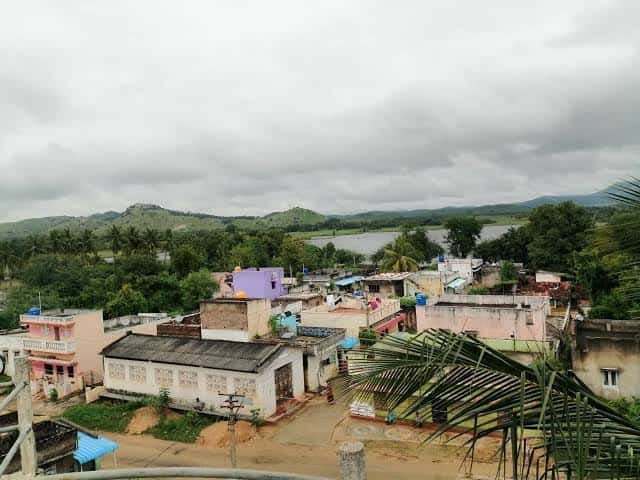
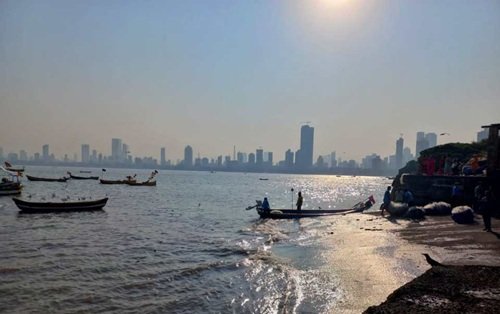
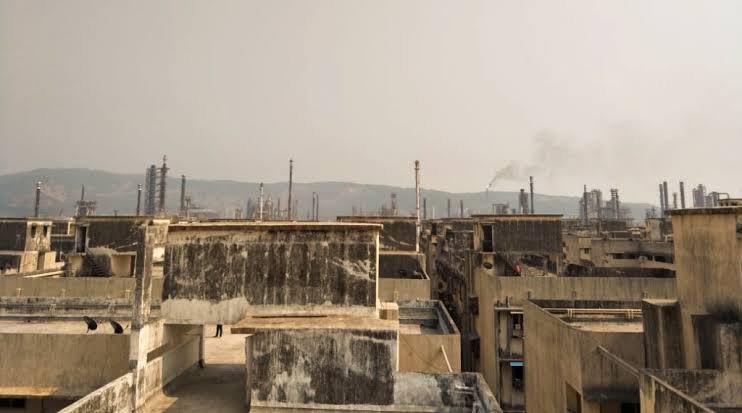
On Mumbai’s eastern seafront in Chembur, Mahul occupies a place in the city’s geography that’s impossible to describe honestly without addressing what it has become. Once a small fishing village, its original Koli inhabitants left decades ago as refineries and chemical plants moved in around them. Today it is best known not as a residential locality in the ordinary sense but as the site of a large municipal rehabilitation colony surrounded by three oil refineries and sixteen chemical factories — a situation that has drawn sustained scrutiny from courts, researchers, and journalists over the pollution and health conditions faced by its roughly 30,000 residents.
Mahul Village Overview
| Detail | Information |
| Location | Chembur East, eastern seafront, Mumbai Suburban District |
| PIN Code | 400074 |
| Nearest Railway Stations | Chembur (approx. 8 km), Kurla (approx. 12 km) |
| Surrounded By | Three oil/petroleum refineries, 16 chemical factories |
| Notable Industries Nearby | BPCL, HPCL, Sea Lord Containers, Aegis Logistics |
| Known For | Severe industrial air and water pollution, BMC rehabilitation colony |
| Documented Concerns | High rates of respiratory illness, reported deaths linked to pollution exposure |
| Nearby Localities | Chembur, Trombay, Ambapada, Govandi, Deonar |
Why Mahul’s Location Cannot Be Separated From Its Industrial Surroundings
Mahul sits on Mumbai’s eastern coastline in the Chembur-Trombay industrial belt, an area that was sparsely populated fishing and mangrove country before oil refineries and chemical plants established themselves there decades ago. That industrial buildup is now inseparable from any honest account of the area’s geography.
- The Mahul-Trombay belt houses three major refineries — including facilities operated by BPCL and HPCL — alongside sixteen chemical factories, a concentration of heavy industry rarely found this close to a major city’s residential areas.
- Since 2009, a large section of Mahul has functioned as a BMC-built resettlement colony for families displaced from slum clearance projects elsewhere in Mumbai, meaning most current residents did not choose to live there but were relocated as part of city redevelopment schemes.
- The Comprehensive Environmental Pollution Index for the Chembur area has been recorded at a level classified as “severely polluted” by Maharashtra’s pollution control authorities, and courts and tribunals, including the National Green Tribunal, have formally acknowledged health risks to residents from the surrounding industrial activity.
Reaching Mahul and Getting Around
Mahul’s transport access is limited and widely reported as a genuine daily hardship for residents, particularly given the distance to functioning schools, hospitals, and shops.
By Rail
- Chembur Railway Station, roughly 8 km away, is the nearest suburban rail link on the Harbour Line.
- Kurla Railway Station, about 12 km away, offers an additional but more distant rail connection.
By Road
- Roads connect Mahul to Chembur and the wider Trombay industrial area, though residents and reporting have consistently noted that public bus services in and around Mahul are irregular.
- The high cost and inconsistency of local transport has been documented as a direct barrier preventing children from reliably attending schools located in Chembur and Kurla.
What’s Around Mahul: A Documented Absence of Basic Facilities
Unlike a typical locality guide, reporting on Mahul consistently highlights the absence, rather than the presence, of everyday civic infrastructure within the settlement itself.
Markets and Shops
- Multiple reports note that few shopkeepers are willing to set up even basic kirana stores in Mahul, citing the area’s pollution and living conditions, leaving residents dependent on travelling to Chembur for daily essentials.
Healthcare and Schools
- There are no functioning schools, hospitals, or medical shops within Mahul itself, according to on-ground reporting, forcing residents to travel to Chembur or Kurla for both healthcare and education.
- A 2013 hospital-linked survey found that a majority of Mahul residents reported symptoms including breathlessness and eye irritation, consistent with prolonged exposure to industrial air pollution.
Legal and Regulatory History
- The Bombay High Court has previously ruled on construction near the HPCL refinery in Mahul, and the Supreme Court has separately criticised municipal authorities for permitting residential construction too close to hazardous industrial installations.
- Residents have organised sustained protests, including a prolonged sit-in demanding safer, alternative housing, citing dozens of deaths linked to pollution exposure over recent years.
What Prospective Residents and Visitors Should Know
Given the well-documented environmental and health concerns, anyone considering Mahul in a residential or investment context should weigh this context seriously rather than treating it as an ordinary Mumbai suburb.
- Government and independent surveys, including one commissioned by IIT Bombay on court direction, have found unsafe conditions relating to air quality, sewage, and water contamination within the settlement.
- Multiple monitoring points in the surrounding Mahul-Trombay-Chembur belt have recorded elevated pollutant concentrations linked to refinery and vehicular emissions.
- Advocacy and legal efforts by residents and civil society groups continue to push for either significant environmental remediation or relocation of affected families to safer housing.
Frequently Asked Questions
Q1. Is Mahul safe to live in currently?
Multiple official surveys, court observations, and independent research have documented serious air and water pollution concerns in Mahul linked to nearby refineries and chemical factories, and residents have reported significant health impacts; anyone evaluating housing here should review this documented history carefully.
Q2. Why do so many people live in Mahul despite these conditions?
Most current residents were resettled there by the BMC following the demolition of slums elsewhere in Mumbai, rather than choosing to relocate to the area voluntarily.
Q3. What transport options connect Mahul to the rest of Mumbai?
Chembur Railway Station (about 8 km) and Kurla Railway Station (about 12 km) are the nearest rail links, though bus services within Mahul itself are reported as irregular.
Q4. Are there schools or hospitals within Mahul?
Reporting indicates there are no functioning schools, hospitals, or medical shops within the settlement itself, with residents required to travel to Chembur or Kurla for these services.