On the southern banks of the Brahmaputra, roughly 40 km from Guwahati, sits a village that has earned a reputation few other places in India can match — Mayong, often called the “Land of Black Magic” or “Black Magic Capital of India.” Centuries of tantric practice, folklore about vanishing men and tamed beasts, and a genuine wealth of archaeological relics have turned this quiet Morigaon district village into one of Assam’s most intriguing offbeat destinations, drawing history buffs and curious travellers alike.
Mayong Village Overview
| Detail | Information |
| Location | Morigaon district, Assam |
| District | Morigaon |
| Distance from Guwahati | Approx. 40 km |
| Distance from Morigaon Town | Short drive |
| Nearest Railway Station | Jagi Road (approx. 35 km) |
| Distance from Pobitora Wildlife Sanctuary | A few kilometres |
| Known For | Black magic and tantra folklore, ancient stone inscriptions, riverside setting |
| Notable Feature | Home to Asia’s longest stone inscription (3.85 metres) |
| Nearby Attractions | Pobitora Wildlife Sanctuary, Brahmaputra riverfront, Kamakhya Temple (Guwahati) |
| Best For | History enthusiasts, folklore travellers, wildlife tourists combining Pobitora |
A Village Shaped by River, Legend, and History
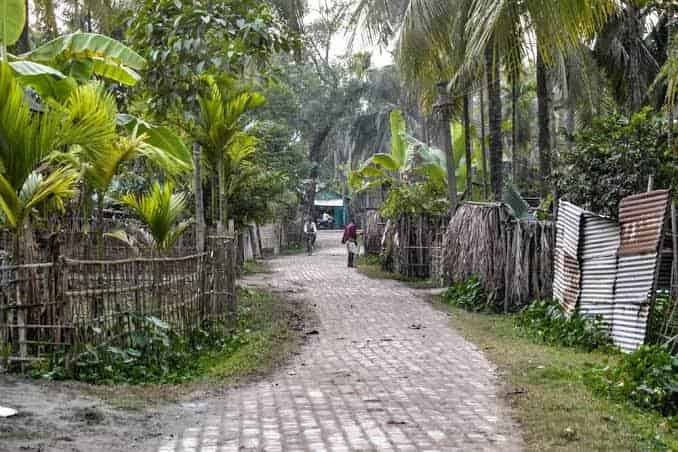
Mayong sits in a striking natural setting, bounded by the Brahmaputra River to the north and the Kolong River to the south, with the smaller Pakaria and Daipara rivulets running along its eastern edge. This riverine geography, combined with centuries of documented tantric and mystical tradition, has given the village a reputation that stretches well beyond its modest size.
- Local tradition traces Mayong’s name to the Sanskrit word “Maya,” meaning illusion, reflecting the area’s long-standing association with sorcery and the occult dating back to roughly the 8th century.
- Practitioners known locally as Bez or Oja passed down mantras, herbal healing knowledge, and ritual practices through generations, treating these skills as inherited family knowledge rather than claimed supernatural power.
- Beyond its magical reputation, Mayong holds genuine archaeological significance, including what’s described as Asia’s longest stone inscription at 3.85 metres, along with numerous other relics scattered across the area.
How to Reach Mayong Village
Mayong’s road connectivity to Guwahati remains the most practical route for most visitors, with rail access requiring an additional road journey from the nearest functioning station.
By Road
- State Highway 3 connects Mayong to Guwahati, a drive of roughly 1.5 to 2 hours through forested landscapes that many visitors describe as adding to the village’s mystical atmosphere.
- Regular buses and taxis operate between Guwahati and Morigaon town, with a further short ride covering the final stretch into Mayong itself.
- Renting a car remains a popular option for travellers wanting flexibility to also explore nearby Pobitora Wildlife Sanctuary on the same trip.
By Rail
- Jagi Road Railway Station, roughly 35 km away, is the nearest functioning rail link, connecting to Guwahati and other parts of Assam, with taxis or buses covering the remaining distance to Mayong via Morigaon town.
- Guwahati Railway Station, being the region’s major rail hub, remains the more practical starting point for most travellers arriving from outside Assam.
By Air
- Lokpriya Gopinath Bordoloi International Airport in Guwahati is the nearest airport, offering domestic and select international connectivity, with the road journey to Mayong taking around 1.5 to 2 hours from there.
What’s Around Mayong: Attractions and Practical Facilities
Mayong’s surroundings blend wildlife tourism with its own folklore-driven attractions, making it easy to combine with other stops in the region rather than visiting in isolation.
Nearby Attractions
- Pobitora Wildlife Sanctuary, just a few kilometres away, is renowned for having one of the highest concentrations of one-horned rhinoceros anywhere in the world, making it a natural pairing with a Mayong visit.
- The Brahmaputra riverfront offers scenic views and a sense of the geography that has shaped Mayong’s isolated, mystical reputation over centuries.
- Kamakhya Temple in Guwahati, associated historically with the Shakti and tantra traditions that Mayong’s sorcerers reportedly followed, is a common addition to itineraries covering both destinations.
Practical Facilities
- Accommodation directly in Mayong remains limited, with the Pobitora Wildlife Sanctuary Tourism Complex offering basic cottage-style stays a few kilometres away.
- Some local homestays operate within Mayong itself, giving visitors a closer, more immersive experience of village life.
- Basic food stalls serve traditional Assamese cuisine, including fish and duck curry, popular among visitors exploring the area.
Why Mayong Continues to Draw Curious Travellers
Mayong’s pull comes from a genuinely rare combination — documented history, striking natural surroundings, and folklore that continues to capture imaginations well beyond Assam’s borders.
- Its centuries-long association with tantra and the occult offers a distinct cultural experience unlike anywhere else in mainstream Indian tourism.
- The village’s archaeological relics add historical substance to what might otherwise be dismissed as pure folklore, giving visitors a fuller picture of the region’s past.
- Proximity to Pobitora Wildlife Sanctuary allows travellers to combine wildlife tourism with cultural exploration in a single, well-connected trip from Guwahati.
Frequently Asked Questions
Q1. Is Mayong safe to visit as a tourist?
Yes, Mayong is generally considered safe and welcomes travellers interested in its culture, history, and folklore.
Q2. What’s the best time of year to visit Mayong?
October to March offers the most pleasant weather for exploring both Mayong and nearby Pobitora Wildlife Sanctuary.
Q3. Can Mayong be visited as a day trip from Guwahati?
Yes, it’s a popular day trip option, roughly 1.5 to 2 hours each way by road, though staying overnight allows time to also explore Pobitora.
Q4. Is there any factual basis to Mayong’s black magic reputation?
There’s no scientific evidence behind the supernatural claims, but the region’s long documented history of tantric and folk-healing practices is well recorded, making it a genuine cultural rather than purely mythical destination.