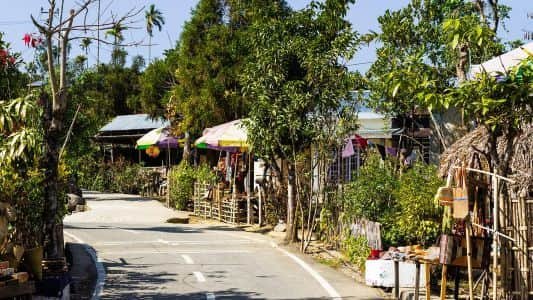
Tucked into the East Khasi Hills near the Bangladesh border, Mawlynnong carries a title that draws visitors from across India and beyond — widely known as “Asia’s Cleanest Village,” a reputation built entirely by the Khasi community’s own long-standing tradition of civic discipline rather than any government intervention. Bamboo dustbins line every lane, root bridges span nearby streams, and living root architecture blends into dense subtropical forest, making Mawlynnong one of Northeast India’s most distinctive offbeat destinations.
Mawlynnong Village Overview
| Detail | Information |
| Location | East Khasi Hills district, Meghalaya |
| District | East Khasi Hills |
| Distance from Shillong | Approx. 90 km |
| Distance from Bangladesh Border | Approx. 2–3 km |
| Nearest Town | Pynursla |
| Known For | “Asia’s Cleanest Village” title, living root bridges, Khasi matrilineal culture |
| Notable Attractions | Living Root Bridge, Sky View bamboo tower, Balancing Rock |
| Nearby Localities | Riwai, Pynursla, Dawki, Cherrapunji |
| Best For | Eco-tourism travellers, offbeat destination seekers, families |
A Village Shaped by Community Discipline and Khasi Tradition
Mawlynnong sits in the East Khasi Hills, close enough to the Bangladesh border that clear days offer views into the neighbouring country’s plains from certain vantage points within the village. Its fame rests on a long-practised community ethic of cleanliness, upheld through collective responsibility rather than municipal enforcement, giving the village a genuinely rare character among India’s rural tourism destinations.
- The village follows the Khasi matrilineal system, where lineage and property pass through the mother’s line, a cultural distinction that shapes daily life and social structure here.
- Bamboo dustbins placed throughout the village, along with daily community sweeping efforts, are central to how residents have sustained the cleanliness reputation over decades.
- Traditional Khasi bamboo and thatch homes sit alongside well-maintained pathways, flower gardens, and orchards, giving the village a distinctly manicured, orderly appearance uncommon in typical rural settlements.
How to Reach Mawlynnong
Reaching Mawlynnong involves a scenic but time-consuming road journey from Shillong, since no rail or air connectivity exists directly to this part of Meghalaya’s hill country.
By Road
- The drive from Shillong covers roughly 90 km and typically takes about 3 to 4 hours, winding through the East Khasi Hills’ forested and hilly terrain.
- Shared taxis and buses operate between Shillong and Mawlynnong via Pynursla, though private vehicles offer more flexibility for combining the trip with nearby attractions.
- Roads through this stretch of Meghalaya can be narrow and winding, so travellers unfamiliar with hill driving often prefer hiring a local driver.
By Rail
- Guwahati Railway Station in neighbouring Assam is the nearest major rail hub, connecting to major Indian cities, with the onward journey to Mawlynnong covered entirely by road through Shillong.
By Air
- Shillong Airport (Umroi) offers limited domestic connectivity, while Guwahati’s Lokpriya Gopinath Bordoloi International Airport, roughly 170–180 km away, provides considerably wider flight options, with both requiring a substantial road journey onward to Mawlynnong.
What’s Around Mawlynnong: Attractions and Nearby Villages
Mawlynnong’s surroundings pack in several of Meghalaya’s signature natural attractions, making it easy to combine with a broader East Khasi Hills itinerary rather than visiting in isolation.
Nearby Attractions
- The Living Root Bridge in nearby Riwai, just a few kilometres away, is one of the region’s iconic bioengineered bridges, formed by training rubber tree roots across streams over generations.
- The Sky View bamboo tower within Mawlynnong offers panoramic views over the surrounding valley and, on clear days, glimpses into Bangladesh.
- Balancing Rock, a naturally balanced boulder formation near the village, is another popular stop for visitors exploring the immediate area.
Nearby Towns
- Dawki, known for its crystal-clear Umngot River, lies a further drive away and is commonly combined with a Mawlynnong visit for river tourism and boating.
- Cherrapunji (Sohra), one of the wettest places on earth and home to numerous waterfalls, sits within a reasonable driving distance for those extending their Meghalaya itinerary.
Practical Facilities
- Homestays and small guesthouses within Mawlynnong offer visitors an immersive way to experience Khasi village life directly.
- Basic food stalls serve local and regional cuisine, though most travellers plan larger provisions and banking needs around Shillong before heading to the village.
Why Mawlynnong Continues to Draw Travellers
Mawlynnong’s pull lies in a genuinely rare combination — a community-driven cleanliness ethic, striking natural architecture in its root bridges, and proximity to some of Meghalaya’s other signature attractions.
- Its “Asia’s Cleanest Village” reputation offers travellers a tangible example of sustainable community practice, distinct from typical tourist-driven infrastructure elsewhere.
- The living root bridges nearby showcase indigenous bioengineering techniques found almost nowhere else in the world, adding genuine cultural and ecological significance to a visit.
- Proximity to Dawki and Cherrapunji makes it easy to build a multi-day East Khasi Hills itinerary around Mawlynnong rather than treating it as a standalone stop.
Frequently Asked Questions
Q1. How far is Mawlynnong from Shillong, and how long does the drive take?
It’s roughly 90 km, typically taking 3 to 4 hours by road given the hilly, winding terrain.
Q2. Can Mawlynnong be visited as a day trip from Shillong?
Yes, though many travellers prefer combining it with an overnight stay to also cover nearby Dawki or the Riwai root bridge without rushing.
Q3. Is Mawlynnong accessible by public transport?
Shared taxis and buses run from Shillong via Pynursla, though private vehicles offer more flexibility for exploring the surrounding attractions.
Q4. What is the best time of year to visit Mawlynnong?
October to May offers the most pleasant weather, while the monsoon months (June to September) bring heavy rain typical of the East Khasi Hills region.