Like PhonePe and Paytm before it, Razorpay runs into the exact same structural wall when it comes to UPI: India’s zero-MDR mandate means every UPI transaction flowing through its payment gateway, and UPI represents a massive share of Indian digital payments, generates no direct revenue at all. Yet Razorpay’s core payments business reportedly turned EBITDA-positive in FY25, on revenue of roughly ₹3,783-3,930 crore, up 65% year-on-year, built around a deliberately layered strategy: acquire a business through its payment gateway, then expand that relationship into banking, lending, payroll and subscription tools until Razorpay becomes the financial operating layer the business runs on every single day. Understanding how Razorpay makes money means tracing this progression from a single transaction fee into an entire B2B fintech stack.
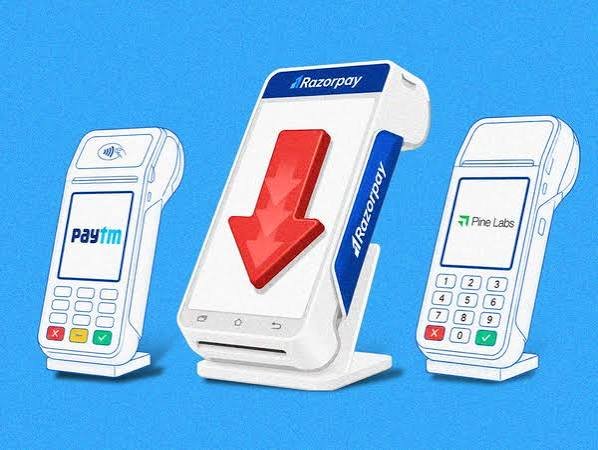
Transaction Fees: The Foundation, Even With UPI Excluded
Despite UPI’s zero-fee mandate, card, debit, net banking and other payment methods processed through Razorpay’s gateway still generate the company’s core, most consistent revenue.
- Razorpay’s standard plan for MSMEs charges roughly 2% plus applicable GST on domestic transactions, with international transactions charged at approximately 3% plus GST, reflecting the higher cost and complexity of processing cross-border payments.
- Card-specific rates differ by card type, with debit card transactions typically charged around 99% and credit card transactions around 2.99%, while larger enterprise clients negotiate custom pricing based on their specific transaction volume and business size.
- UPI transactions, mandated to be zero-fee under Indian regulation, generate no direct revenue for Razorpay, exactly the same structural limitation faced by PhonePe and other major Indian payment platforms, meaning this massive and fast-growing payment method contributes to Razorpay’s processing volume without contributing proportionally to its top line.
- Despite this limitation, transaction fees remain Razorpay’s primary and most consistent revenue stream, with the company’s core payments business reportedly generating ₹2,068 crore in FY24 alone, up 24% year-on-year, illustrating just how much volume non-UPI payment methods still represent.
RazorpayX: Business Banking as a Recurring Revenue Layer
Once a business is already processing payments through Razorpay, the company’s banking platform extends that relationship into daily financial operations.
- RazorpayX offers businesses current accounts, automated payouts, vendor payments, corporate cards and treasury management tools, functioning as a comprehensive business banking layer built on top of the core payment relationship.
- Revenue here comes through subscription fees for premium banking features, transaction fees on domestic and international wire transfers, and notably, float income earned on deposits held within the platform, a revenue mechanism similar to how traditional banks profit from customer balances.
- By embedding itself into a business’s day-to-day treasury and payout operations, Razorpay deepens its relationship well beyond the point of a single payment transaction, making itself genuinely difficult for a business to switch away from once integrated.
- This progression, from payment gateway to business banking, reflects Razorpay’s explicit strategy of acquiring customers through their immediate payment processing need, then expanding the relationship into adjacent financial products that generate steadier, more diversified revenue.
Razorpay Capital: Lending Built on Transaction Data
Razorpay’s lending arm turns the company’s visibility into a merchant’s actual cash flow into a genuine underwriting advantage.
- Razorpay Capital provides working capital loans and revenue-based financing to merchants already processing payments through the platform, using their transaction history to assess creditworthiness rather than relying purely on traditional credit scoring.
- Revenue comes through interest income on these loans, along with origination fees charged at the time of disbursement, with reported lines of credit starting around 5%, within a broader range of roughly 0.5% to 2.5% depending on the specific product and borrower profile.
- The revenue-based repayment model, where repayments scale with a merchant’s actual sales rather than following a fixed schedule, is described as commercially innovative, though it requires careful navigation of evolving RBI guidelines governing digital lending platforms.
- This lending business represents one of Razorpay’s higher-margin revenue opportunities, since the company’s existing payment data gives it a genuine informational advantage over traditional lenders when assessing a merchant’s ability to repay.
Razorpay Payroll and Subscription Billing: SaaS-Style Recurring Revenue
Beyond payments and banking, Razorpay has built dedicated software products that generate their own distinct, subscription-based income.
- Razorpay Payroll offers businesses, particularly startups and small enterprises, a tool for managing salary disbursements and related compliance, generating revenue through SaaS-style subscription fees.
- The Subscriptions product, aimed at businesses with predictable, recurring revenue models, charges either a fee per successful recurring transaction or a monthly usage fee, giving Razorpay a direct stake in supporting the subscription economy among its own merchant base.
- These SaaS-style products give Razorpay genuinely recurring, predictable revenue that doesn’t depend on transaction volume fluctuations the way core payment processing fees do, adding meaningful stability to the overall revenue mix.
- This expansion into payroll and subscription billing reflects the same underlying strategy seen across RazorpayX and Razorpay Capital: using the initial payments relationship as a foundation to sell additional, higher-margin software tools a growing business genuinely needs.
Payment Links and Razorpay Store: Serving Small Merchants and Freelancers
Razorpay also captures revenue from the smaller end of the business spectrum, where a full payment gateway integration isn’t always necessary.
- Payment Links let freelancers and small business owners send a simple link via WhatsApp, SMS or email to collect payments instantly, without needing a dedicated website or app integration.
- Razorpay charges a flat fee per transaction processed through this feature, along with an optional monthly fee for premium store features through Razorpay Store, a lightweight storefront solution for very small sellers.
- This product line extends Razorpay’s addressable market well beyond larger, technically sophisticated businesses, capturing revenue from freelancers and micro-businesses who wouldn’t otherwise need or use the company’s full API-based payment gateway.
- This approach reflects a broader pattern where Razorpay segments its offerings by business size and sophistication, ensuring it can monetize everything from a single freelancer’s occasional invoice to an enterprise’s full-scale payment infrastructure.
Cross-Border Payments: A Newer, Growing Opportunity
Razorpay has recently expanded its regulatory capability to directly support international payment flows, opening up a genuinely new revenue avenue.
- In December 2025, Razorpay secured the RBI’s Payment Aggregator – Cross Border (PA-CB) licence, a significant regulatory milestone that lets the company directly facilitate cross-border payment transactions rather than relying entirely on third-party partnerships for this capability.
- International transactions were expected to represent around 20% of Razorpay’s revenue by 2025, reflecting the company’s deliberate push to capture higher-margin cross-border transaction fees, which run notably higher than domestic rates.
- This expansion positions Razorpay to better serve Indian businesses selling internationally and global businesses wanting to accept payments from Indian customers, a genuinely growing segment as e-commerce and digital services increasingly cross borders.
- Securing this license directly, rather than depending on partner arrangements, gives Razorpay more control and a larger share of the revenue generated from this specific, higher-margin transaction category.
API Access and Enterprise Integration Fees
For larger, more technically sophisticated businesses, Razorpay monetizes the depth of its platform integration itself.
- Razorpay develops a comprehensive API that lets businesses embed its payment gateway directly into their own websites and apps, charging a platform fee, reportedly around 2%, for this level of integration.
- Enterprise clients pay for API access fees tied to deeper integrations with Razorpay’s broader financial services stack, reflecting the additional value and customization these larger businesses require compared to a standard small-business plan.
- This API-driven approach reflects Razorpay’s developer-friendly positioning, a core part of its value proposition that has helped it build deep, difficult-to-replace integrations within its customers’ own technical infrastructure.
- As businesses build more of their internal financial operations around Razorpay’s API, switching costs rise substantially, reinforcing customer retention and supporting the company’s broader strategy of becoming the financial operating layer a business depends on daily.
Why This Layered Strategy Has Worked
Understanding the logic behind Razorpay’s progression from simple payment processing to a full financial services stack helps explain its overall trajectory.
- Razorpay’s model is explicitly described as being “designed around the financial services lifecycle of a growing business”: acquiring customers through their immediate payment gateway need, expanding the relationship through adjacent financial products like RazorpayX and Razorpay Capital, and deepening integration through tools that make switching away genuinely difficult.
- Despite UPI’s zero-fee mandate eliminating direct revenue from a massive share of transaction volume, Razorpay has built enough adjacent revenue streams, banking, lending, payroll, subscriptions and cross-border payments, that its core payments business has reportedly turned EBITDA-positive, a meaningful milestone for a company operating at this scale.
- With FY25 revenue reportedly reaching ₹3,783-3,930 crore, representing roughly 57-65% year-on-year growth, and a confidential DRHP filing with SEBI in June 2026 targeting an IPO of around $600 million, Razorpay’s financial trajectory suggests this multi-product strategy is genuinely translating into sustainable, scaling revenue.
- This approach mirrors the broader pattern seen across Indian fintech, where payment processing alone, especially given UPI’s zero-fee structure, simply cannot sustain a large-scale business on its own, making the layered expansion into banking, lending and software tools not just a growth strategy but a genuine financial necessity.
Frequently Asked Questions
Q1. If UPI generates no direct revenue, why does Razorpay still actively support and promote UPI payments?
A: Supporting UPI, despite its zero-fee structure, keeps Razorpay’s payment gateway comprehensive and genuinely useful to merchants who need to accept every major Indian payment method, and the transaction data generated through UPI processing still feeds into other revenue-generating products like Razorpay Capital’s lending decisions, even though the UPI transaction itself doesn’t directly charge a fee.
Q2. How is Razorpay’s lending business different from a traditional bank offering business loans?
A: Razorpay Capital uses the merchant’s actual transaction history processed through Razorpay’s own payment gateway to assess creditworthiness, giving it real-time visibility into a business’s genuine cash flow that a traditional bank typically wouldn’t have access to, and its revenue-based repayment model, where repayments scale with actual sales, differs from the fixed monthly installments typical of conventional bank loans.
Q3. Why would a large enterprise pay extra for API access fees when smaller businesses use Razorpay for free or a standard transaction fee?
A: Enterprise clients typically require deeper, more customized integration with Razorpay’s broader financial services stack, including specific banking, payout and lending features tailored to their scale and operational complexity, which justifies the additional API access and platform fees beyond what a standard small-business transaction fee plan would cover.
Q4. Does securing the RBI’s cross-border payment license mean Razorpay no longer needs international banking partners?
A: This license lets Razorpay directly facilitate cross-border transactions and capture a larger share of that revenue rather than relying entirely on third-party partnerships, though the company may still maintain certain partner relationships for specific markets or currency corridors as it continues building out its international payments capability.