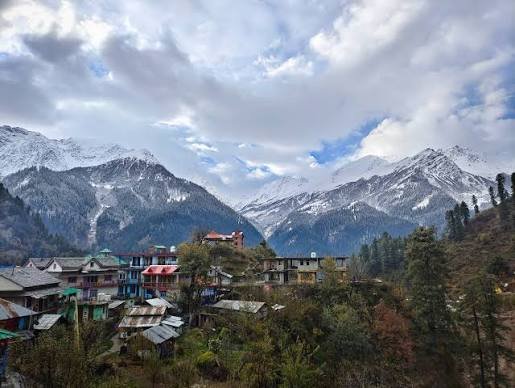
At the far end of the Parvati Valley, where the motorable road finally runs out, Tosh has become something of a backpacker legend — a cluster of wooden Himachali houses clinging to a steep hillside above the Tosh Nallah, ringed by snow peaks and reachable only on foot for the final stretch. Once a remote hamlet known mainly to shepherds and a handful of trekkers, Tosh now draws travellers from across India chasing mountain views, cheap cafés, and the particular quiet that comes from being at the literal end of the road.
Tosh Village Overview
| Detail | Information |
| Location | Parvati Valley, Kullu district, Himachal Pradesh |
| District | Kullu |
| Altitude | Approx. 2,400 metres |
| Distance from Kasol | Approx. 17–19 km |
| Distance from Bhuntar Airport | Approx. 32–35 km |
| Distance from Manali | Approx. 75–80 km |
| Known For | Himalayan trekking base, backpacker cafés, Parvati Valley views |
| Last Motorable Point | Barsheni village (short trek onward to Tosh) |
| Nearby Localities | Barsheni, Kasol, Kalga, Pulga |
| Best For | Backpackers, trekkers, budget mountain travellers |
Where Tosh Sits in the Parvati Valley
Tosh occupies a steep hillside perch at the upper end of the Parvati Valley, past Kasol and beyond the small settlement of Barsheni, which marks the point where the road stops and a short trek takes over. This isolation, more than anything else, has shaped Tosh’s identity as one of Himachal’s quieter alternatives to the increasingly crowded Kasol.
- The village sits close to 2,400 metres altitude, offering sweeping views of the surrounding snow-capped peaks that frame the upper Parvati Valley.
- Tosh’s traditional wooden houses, built in the distinctive Kullu-Himachali style with stacked stone and timber, remain largely intact despite the growing tourist footfall of the past decade.
- Its relative inaccessibility by road has kept large-scale construction in check compared to Kasol, though guesthouses and cafés have multiplied steadily to meet backpacker demand.
How to Reach Tosh Village
Getting to Tosh requires patience and a final stretch on foot, since no road runs directly into the village itself — a detail that surprises many first-time visitors planning their route.
By Road
- The journey typically starts from Bhuntar or Kullu, following the road up the Parvati Valley through Kasol to Barsheni, the last point vehicles can reach.
- This drive from Kasol to Barsheni takes roughly 45 minutes to an hour, depending on road conditions, which can deteriorate during monsoon season.
- Shared taxis and buses run relatively frequently between Kasol and Barsheni, making this leg of the journey straightforward for most travellers.
On Foot
- From Barsheni, a trek of approximately 3–4 km and 1.5 to 2 hours covers the final ascent into Tosh, climbing steadily through pine forest and terraced fields.
- The trail is well-marked and manageable for most fitness levels, though carrying heavy luggage can make the climb considerably tougher.
- Mules and porters are occasionally available near Barsheni for travellers unable to carry their own bags up the trail.
By Rail and Air
- Bhuntar Airport, the nearest airstrip, has limited seasonal flights mainly from Delhi and Chandigarh, with the remaining journey to Barsheni and then Tosh completed by road and foot.
- The nearest broad-gauge railway station is in Chandigarh or Una, both a long road journey away, making air or road travel from Delhi the more practical options for most visitors.
What’s Around Tosh: Trekking Bases and Nearby Villages
Tosh’s real appeal lies in what surrounds it — a network of trekking trails and neighbouring hamlets that together make up the upper Parvati Valley’s backpacker circuit.
Trekking Routes
- Tosh serves as a popular base for treks toward Kheerganga, a well-known trail known for its hot springs and views, though most trekkers access Kheerganga via Barsheni rather than directly from Tosh.
- Longer, more demanding routes toward the Sar Pass and Pin Parvati Pass also pass through this general stretch of the valley, drawing more experienced trekkers.
Neighbouring Villages
- Kalga and Pulga, two smaller villages a short trek from Tosh, offer a similarly quiet alternative for travellers wanting to explore beyond the more visited spots.
- Kasol, the valley’s main backpacker hub, remains the practical base for banking, better mobile connectivity, and a wider range of shops and restaurants.
Practical Facilities
- Tosh has a growing number of guesthouses, cafés, and homestays, though electricity and mobile network reliability can still be inconsistent, particularly during winter months.
- ATMs and larger provisions are best sourced in Kasol before heading up, since Tosh’s own facilities remain deliberately basic.
Why Tosh Continues to Draw Travellers
Tosh’s popularity has grown steadily despite, or perhaps because of, its inaccessibility, offering an experience that’s become harder to find in the increasingly commercial Parvati Valley.
- Its car-free setting preserves a slower pace and quieter atmosphere than Kasol, which has grown considerably busier over the years.
- The village’s mountain views and traditional architecture give it a distinct visual character that draws photographers and long-stay travellers alike.
- Its position as a trekking gateway keeps it relevant for both short weekend visitors and more serious hikers heading deeper into the valley.
Frequently Asked Questions
Q1. Can vehicles reach Tosh village directly?
No, the road ends at Barsheni, and the final 3–4 km stretch to Tosh must be covered on foot.
Q2. Is Tosh suitable for a day trip from Kasol?
It’s possible but tight — most travellers prefer staying overnight to properly enjoy the views and short treks around the village.
Q3. Does Tosh have reliable mobile network and electricity?
Connectivity can be patchy, especially in winter, so it’s best to inform family of limited contact and carry essentials from Kasol.
Q4. What’s the best time to visit Tosh village?
March to June and September to November offer the most pleasant weather, while heavy snow can cut off access during peak winter months.