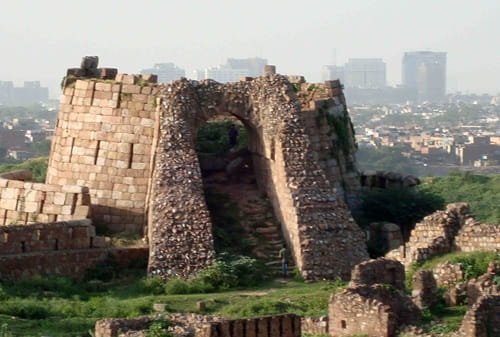
Roughly 160 km from Delhi and just 32 km from Moradabad, Sambhal carries a history that stretches back centuries — an ancient settlement associated with mythology, a provincial capital under Sikandar Lodi in the late 15th century, and today the headquarters of one of Uttar Pradesh’s newer districts. Known for the historic Shahi Jama Masjid and a long-standing brass and horn-craft trade, Sambhal remains an important Rohilkhand region town balancing deep historical roots with its role as a modern district centre.
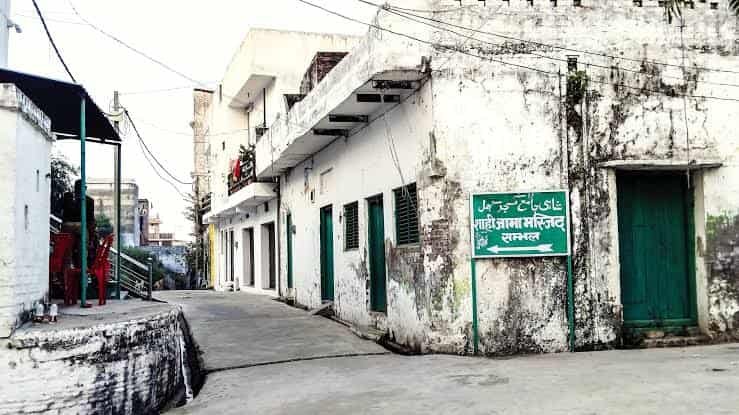
Sambhal Overview
| Detail | Information |
| Location | Rohilkhand region, western Uttar Pradesh |
| District | Sambhal (district headquarters at Bahjoi) |
| Division | Moradabad |
| Distance from Delhi | Approx. 158–160 km |
| Distance from Moradabad | Approx. 32 km |
| Distance from Lucknow | Approx. 355 km |
| Known For | Shahi Jama Masjid, ancient history, brass and horn craft trade |
| Established | 12th century AD (per historical records) |
| Nearby Towns | Chandausi, Gunnaur, Bahjoi, Moradabad |
| Best For | History enthusiasts, local traders, residents with district administrative needs |
An Ancient Town at the Heart of a Newer District
Sambhal’s history stretches back to the 12th century AD, and the town carries associations with figures ranging from Prithviraj Chauhan to the Delhi Sultanate rulers who later held sway over the region. Despite this deep historical footprint, Sambhal only became a district headquarters relatively recently, carved out of Moradabad district in 2011.
- The district was briefly named “Bhimnagar” at the time of its creation, honouring B.R. Ambedkar, before widespread local protests led to it retaining the historic name Sambhal.
- Sambhal district comprises three tehsils — Sambhal, Chandausi, and Gunnaur — with the administrative headquarters located in Bahjoi town rather than Sambhal city itself.
- The town’s Shahi Jama Masjid remains its most prominent historical landmark, reflecting Sambhal’s significance during the period of Muslim rule in northern India.
Getting To and Around Sambhal
Sambhal’s location within the Moradabad division gives it reasonable road and rail connectivity, positioned along key routes linking Delhi to other parts of western Uttar Pradesh.
By Road
- Sambhal sits roughly 158–160 km from Delhi and about 32 km from Moradabad, making road travel from both cities a practical option for most visitors and residents.
- State highways connect Sambhal to Chandausi, Gunnaur, Bahjoi, and Moradabad, forming the backbone of the district’s internal road network.
- Local buses and shared taxis operate frequently between Sambhal and neighbouring towns within the district.
By Rail
- Sambhal’s proximity to Moradabad, a significant railway junction, gives residents relatively convenient access to broader rail connectivity across northern India via that hub.
- Babrala Railway Station, located within Sambhal district, offers an additional local rail access point operated by North Central Railway.
By Air
- The nearest significant airport connectivity runs through Delhi, given Sambhal’s distance of roughly 158 km, making Delhi the practical air travel gateway for most long-distance visitors.
What’s Around Sambhal: Trade, Education, and Nearby Towns
Sambhal functions as a genuine commercial and administrative centre for its surrounding rural belt, with several nearby towns forming part of the broader district ecosystem.
Local Trade and Commerce
- Sambhal has long been known for its brass and horn-craft trade, a traditional industry that continues to support local livelihoods alongside general commerce.
- The town’s markets serve both Sambhal city and the surrounding villages within the district, functioning as an important local trading hub.
Educational Institutions
- Government Post-Graduate College Sambhal, affiliated with M.J.P. Rohilkhand University, offers undergraduate and postgraduate courses in science, arts, and commerce, serving as one of the town’s key higher education institutions.
Nearby Towns
- Chandausi, one of the district’s three tehsils, hosts the District and Sessions Court, making it an important judicial centre within Sambhal district.
- Bahjoi, the district’s administrative headquarters, lies within the same district and handles much of the formal district-level governance.
- Moradabad, roughly 32 km away, remains the nearest major city, offering broader commercial, healthcare, and transport infrastructure beyond what Sambhal itself provides.
Why Sambhal Continues to Hold Regional Significance
Sambhal’s importance today rests on a combination of its deep historical legacy and its practical role as a functioning district centre serving a substantial rural population.
- Its centuries-old history and landmarks like the Shahi Jama Masjid continue to draw historical and academic interest to the town.
- As a district headquarters area, Sambhal serves genuine administrative, judicial, and commercial functions for the surrounding Rohilkhand countryside.
- Its position between Delhi and Moradabad keeps it reasonably well-connected for a town of its size, supporting both trade and everyday commuting needs.
Frequently Asked Questions
Q1. How far is Sambhal from Delhi?
Approximately 158–160 km, typically covered by road in a few hours depending on traffic and route conditions.
Q2. Is Sambhal the administrative headquarters of its own district?
The district headquarters is technically located in Bahjoi town, while the District and Sessions Court sits in Chandausi, both within Sambhal district.
Q3. What is Sambhal historically known for?
It’s known for its ancient history dating back centuries, its association with the Delhi Sultanate period, and landmarks including the Shahi Jama Masjid.
Q4. Is Sambhal well-connected by rail?
Its proximity to Moradabad, a significant railway junction roughly 32 km away, gives residents reasonably convenient access to broader rail networks.